EN
EN  NL
NL FR
FR DE
DE HI
HI IT
IT KO
KO PL
PL PT
PT RU
RU ES
ES TR
TR AR
AR BG
BG HR
HR CS
CS DA
DA FI
FI EL
EL JA
JA NO
NO RO
RO SV
SV IW
IW ID
ID LV
LV LT
LT SR
SR SK
SK SL
SL UK
UK VI
VI ET
ET HU
HU UZ
UZ TH
TH FA
FA MS
MS BE
BE HY
HY AZ
AZ KA
KA MN
MN MY
MY KK
KK TG
TGA Planetary corundum Mill Jar becomes especially significant when laboratories require fine grinding that guarantees high purity and stability of results. In many scientific areas, any contamination of the Шлайф топки, шлифовъчни среди may influence test accuracy and properties of the material under examination. The selection of a correct jar material, as well as the creation of appropriate grinding conditions, will allow obtaining better results and will extend the service period of laboratory equipment. This manual is designed to assist in increasing the grinding process efficiency by means of using a corundum mill jar.
Material Advantages of a Planetary corundum Mill Jar
The material of a grinding jar directly affects the quality of the final sample. A Planetary corundum Mill Jar is made from high-purity corundum, also known as aluminum oxide ceramic, which is widely used in laboratories that require clean and stable grinding conditions. Its main advantage is strong wear resistance. During high-speed planetary milling, the jar and grinding balls experience constant impact and friction. A corundum jar can handle this repeated stress while reducing material loss from the container itself.
Another important benefit is its high chemical stability. Many samples used in research can react with ordinary metal containers, causing unwanted impurities or changing the sample properties. Corundum has excellent resistance to acids, alkalis, and many chemical substances, making it suitable for grinding different types of materials without easily affecting the sample composition. For example, when a laboratory prepares ceramic powders for testing, using a corundum jar helps maintain the original purity of the powder and avoids metal contamination.
Corundum also performs well under high-temperature conditions. During long grinding cycles, heat can build up inside the jar due to friction and repeated impacts. The stable structure of corundum allows it to maintain good performance even when temperatures rise. This makes it a practical choice for materials that require longer grinding times or strict temperature control.
The smooth inner surface of a high-quality corundum jar also helps reduce material sticking. Fine powders can sometimes attach to rough surfaces, making cleaning more difficult and affecting the next batch of samples. A smoother surface allows operators to remove remaining particles more easily between tests.
For research teams working with battery materials, geological samples, or advanced ceramic powders, these material features help create more consistent results. A suitable grinding jar does not only hold the sample; it becomes an important part of the grinding process. By choosing a corundum jar with the right purity level and capacity, users can improve sample quality while reducing problems caused by contamination and wear.
Planetary corundum Mill Jar Applications in Battery and Ceramic Powders
A Planetary corundum Mill Jar is widely used in the preparation of battery materials and ceramic powders because these fields often require high purity, fine particle sizes, and stable grinding results. During material development, even a small amount of unwanted contamination can affect performance testing. A corundum jar helps researchers create cleaner samples by providing a strong and chemically stable grinding environment.
In battery material research, grinding is an important step for improving powder uniformity and preparing active materials for further testing. Materials such as lithium iron phosphate, graphite, and other electrode powders often need controlled particle sizes to improve mixing and processing. A Planetary corundum Mill Jar helps break down larger particles while reducing the risk of metal contamination that may come from traditional grinding containers. For example, a battery research team developing new cathode materials may use a corundum jar during laboratory experiments to keep the powder composition closer to the original formula.
Ceramic powder production is another common application. Ceramic materials often require very fine and evenly distributed particles before forming and sintering. Materials like alumina, zirconia, silicon carbide, and other advanced ceramics need careful grinding to achieve the desired performance. A corundum jar can handle these hard materials because of its excellent wear resistance. This allows researchers to perform repeated grinding tests without quickly damaging the container.
The jar is also useful during small-batch experiments where researchers need to compare different formulas. For example, when testing several ceramic mixtures, each sample can be ground under the same conditions to study how particle size affects strength, density, or heat resistance. The stable performance of a corundum jar helps reduce differences caused by the grinding equipment itself.
When using a Planetary corundum Mill Jar for battery and ceramic powders, operators should choose suitable grinding balls, control the rotation speed, and avoid overfilling the jar. Proper cleaning between batches is also important, especially when working with sensitive materials. With careful operation, a corundum mill jar can support accurate laboratory testing and help researchers achieve more reliable powder preparation results.
Planetary corundum Mill Jar vs Stainless Steel Mill Jar
Choosing the right grinding jar is important because the jar material can affect sample purity, grinding efficiency, and maintenance needs. Both Planetary corundum Mill Jars and stainless steel mill jars are commonly used in laboratories, but they have different strengths. The better choice depends on the type of material being processed and the quality requirements of the final sample.
A Planetary corundum Mill Jar is often selected for applications that require high purity. Corundum has excellent wear resistance and strong chemical stability, which helps reduce contamination during long grinding processes. This makes it suitable for sensitive materials such as battery powders, ceramic materials, and advanced research samples. For example, when preparing lithium battery cathode powders, even a small amount of metal particles from the container may affect test results. A corundum jar helps keep the sample cleaner during preparation.
Stainless steel mill jars, on the other hand, are known for their toughness and impact resistance. They can handle heavy grinding tasks and are suitable for many general laboratory applications. Materials such as minerals, ores, and some industrial powders can often be processed effectively with stainless steel containers. They are also less likely to crack when exposed to strong mechanical impact.
The main difference between the two materials is contamination control. Stainless steel may release trace amounts of metal elements during repeated high-energy grinding, especially when processing very hard materials for long periods. Corundum provides better protection against this issue because its ceramic structure is highly stable and does not easily introduce unwanted metal impurities.
However, stainless steel jars may be a better option when mechanical strength and cost efficiency are the main concerns. They are commonly used for routine grinding where extremely high purity is not required. Corundum jars are more suitable when sample quality and material stability are the top priorities.
Before making a choice, users should consider the sample type, required purity level, grinding time, and testing goals. A laboratory working with different materials may even use both types of jars, selecting the one that matches each specific experiment. Proper selection helps improve grinding results and prevents problems during later analysis.
How to Match a Planetary corundum Mill Jar with a Planetary Ball Mill
Selecting a Planetary corundum Mill Jar that matches the planetary ball mill is important for achieving stable grinding performance. A jar that does not fit the equipment properly may cause uneven grinding, excessive vibration, or reduced efficiency. Before starting an experiment, users should check several key factors, including jar size, weight, speed requirements, and material compatibility.
The first step is to confirm the jar capacity. Planetary ball mills usually support different jar volumes, such as small laboratory sizes for research samples and larger sizes for pilot testing. The jar capacity should match the machine's holder size and load range. For example, if a planetary ball mill is designed for four small jars, using oversized containers may increase the load on the motor and affect operation stability.
The total weight of the jar is another factor that needs attention. A corundum jar is heavier than some metal or plastic containers because of its dense ceramic structure. When adding grinding balls and materials, the combined weight should stay within the machine's recommended range. Keeping the load balanced helps reduce vibration and allows the mill to run smoothly.
Grinding speed also affects jar selection. High-speed planetary milling creates strong impact forces between the grinding balls and the sample. A suitable corundum jar should have enough mechanical strength to handle these forces during long grinding cycles. Users should also make sure the jar shape matches the planetary motion of the equipment to achieve even mixing and grinding.
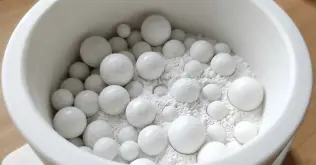
The type of grinding balls should match both the jar and the material being processed. Corundum grinding balls are often paired with corundum jars when high purity is needed, while other ceramic balls may be selected for specific applications. For example, a laboratory preparing ceramic powders may choose a full ceramic grinding system to reduce contamination from different materials.
Before using a new Planetary corundum Mill Jar, check the sealing condition, clean the inner surface, and perform a short test run if possible. Proper matching between the jar and the planetary ball mill not only improves grinding results but also helps extend the service life of both the jar and the equipment.
Cleaning and Maintenance Tips for a Planetary corundum Mill Jar
Keeping a planetary corundum mill jar clean is one of the easiest ways to protect your samples and extend the life of the jar. Even a small amount of leftover powder from a previous test can mix with the next batch and affect the final results. This is especially important when working with high-purity materials or samples used for research.
Start by emptying the jar as soon as the grinding process is finished. Loose powder is much easier to remove before it has time to stick to the inner surface. Use a soft brush or a clean, dry cloth to remove any remaining particles. Avoid using metal brushes or sharp tools because they can scratch the surface of the corundum Буркани за мелница за планетарна топкова мелница . Small scratches may collect residue over time and make cleaning more difficult.
If dry cleaning is not enough, wash the jar with clean water or a suitable cleaning liquid that matches the material you processed. For oily or sticky samples, a mild laboratory detergent may help remove residue. Rinse the jar well so that no cleaning agent remains inside. Before using the jar again, let it dry completely. Any moisture left inside can change the properties of moisture-sensitive powders and reduce grinding quality.
Grinding balls also need regular cleaning. Dirty grinding media can carry particles from one batch to another. Clean and dry the balls at the same time as the jar so that both are ready for the next experiment.
Regular inspections are just as important as cleaning. Check the inside of the jar for cracks, chips, or signs of heavy wear. Also inspect the sealing ring and lid to make sure they still fit tightly. A damaged seal can allow powder to escape during high-speed grinding, leading to material loss and unnecessary cleanup.
Many laboratories keep a simple cleaning log for each mill jar. Recording what material was processed, how the jar was cleaned, and any signs of wear makes it easier to plan maintenance and avoid accidental cross-contamination. A few extra minutes of care after each grinding session can help keep the mill jar performing well for years.
Съдържание
- Material Advantages of a Planetary corundum Mill Jar
- Planetary corundum Mill Jar Applications in Battery and Ceramic Powders
- Planetary corundum Mill Jar vs Stainless Steel Mill Jar
- How to Match a Planetary corundum Mill Jar with a Planetary Ball Mill
- Cleaning and Maintenance Tips for a Planetary corundum Mill Jar

Changsha Tianchuang (TENCAN) Powder Technology Co., Ltd., основана през 2006 г., е интегрирано предприятие, специализирано в научноизследователска и развойна дейност, производство и продажби. Нейният център за научноизследователска и развойна дейност, продажби и операции се намира в зоната за икономическо и технологично развитие на Чанша, а производствената ѝ база е във високотехнологичния индустриален парк Уши.